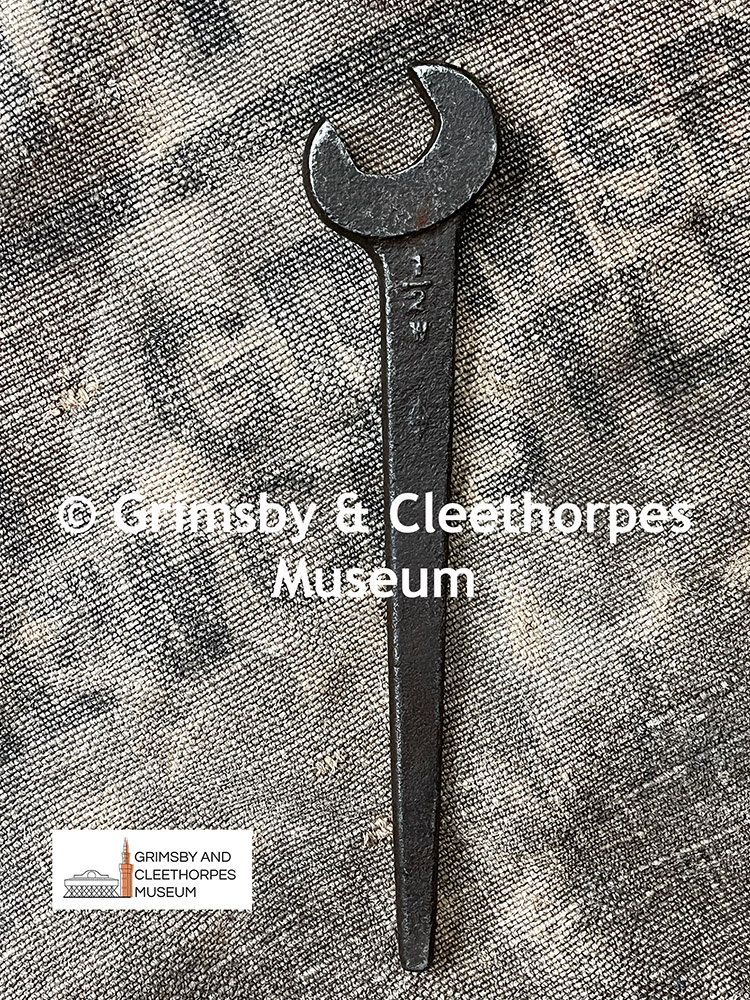
A tool provided with every Anderson air raid shelter. The shelters were self-assembled in the garden. The ‘rat tail’ handle went through the holes in the galvanised, corrugated, 14 gauge steel sheets to align them ready for the bolts to go through. After construction, the ‘rat tail’ spanner was kept inside the shelter to be […]
A tool provided with every Anderson air raid shelter. The shelters were self-assembled in the garden. The ‘rat tail’ handle went through the holes in the galvanised, corrugated, 14 gauge steel sheets to align them ready for the bolts to go through. After construction, the ‘rat tail’ spanner was kept inside the shelter to be used as a tommy bar in case the main door was blocked by bomb debris. The Anderson shelter was named after Sir John Anderson, the Lord Privy Seal, who initiated the design and development of the shelter in 1938. The shelters were made of 6 curved, corrugated panels, 6 straight, corrugated panels and two end panels, one with a door. Anderson shelters performed well but they were unpopular as it was cold and damp inside.